HVAC Mold Cleaning in Hudson, FL
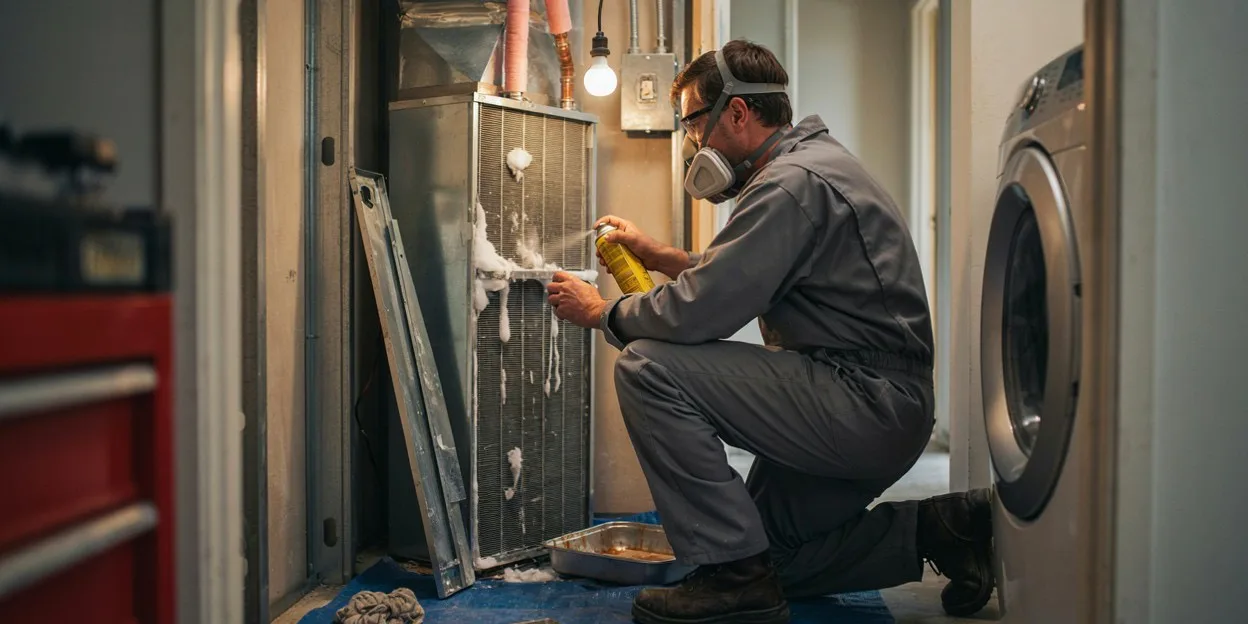
The air handler sits in a closet off the hallway, the way it does in most houses here, and every time it starts there is a wet, sour smell for the first minute. The closet floor has a rust ring and the metal around the filter slot has black speckles. This site connects you by phone with an independent local provider who does HVAC mold cleaning in Hudson and across Pasco County.
What the crew does first
The tech opens the cabinet. Inside are the coil, which is wet all summer, the drain pan under it, the insulation lining the cabinet walls, and the condensate line that carries the water outside. A clogged line and a rusted pan are the two most common reasons water stands in the cabinet long enough to grow anything.
Then they check the ducts. In a slab house the ducts run through a low attic that is hotter than the roof, and a duct that leaks cold air sweats on the outside. A light and a camera at the registers show whether the growth is on the cabinet, the coil, or the inner liner of the flex duct.
What to do in the next hour
Do not spray anything into the return grille or the cabinet, and do not set off a store-bought fogger. Both push chemicals through the ducts into every room. Set the thermostat fan to auto so the blower only runs while it is cooling.
Go outside and find the condensate line, a small PVC pipe near the outdoor unit. If nothing drips from it on a hot afternoon, the line is clogged. Look at the closet floor for standing water or a rusted pan. Note the age of the system, which is often on a sticker inside the cabinet door.
What is usually saved and what is removed
Metal cleans. The coil is cleaned in place, the pan is flushed or replaced, and the condensate line is cleared, usually with a float switch added so the unit shuts off before the next overflow. The cabinet gets a HEPA vacuum and a wipe-down.
Porous parts do not clean well. Fiberglass duct board, the old insulation lining the cabinet, and flex duct with growth on the inner liner get replaced. Drywall around a closet that stood wet for a while is a separate job; see mold removal. Growth on the attic side of the ducts belongs to attic mold remediation. A smell that outlasts the cleaning is mold odor removal.
Pasco County notes: old systems, humidity, and two licenses
The air conditioner is the dehumidifier in a Florida house, and a lot of systems on this coast are past their working life. A unit that was sized for a 1975 house with jalousie windows and is now cooling a house with new windows and a closed floor plan short-cycles: it hits the thermostat fast and shuts off before it pulls much water out of the air. The closet, the grout, and the cabinet stay damp all summer.
Manufactured homes have a smaller air handler, often in a hall closet or under the floor, with ducts in the belly. A wet belly wrap and a wet duct run go together, so say which kind of home it is on the call.
Cleaning the coil and pan is air-conditioning work. Removing more than about ten square feet of mold-affected material is remediation under Chapter 468, Part XVI, where Florida keeps the assessor and remediator as separate companies. Ask which license applies. Replacing a system or rerouting a drain line needs a mechanical permit through Pasco County or your city. Many Florida policies cap mold at a fixed amount, and condensation damage is often treated as maintenance rather than a covered loss.
Calling about HVAC mold cleaning
Have the address, the age of the system, and where the air handler sits. Say whether the smell is only at startup or all the time, and whether the drain line has ever backed up. Call (727) 353-1690.