Mold Odor Removal in Hudson, FL
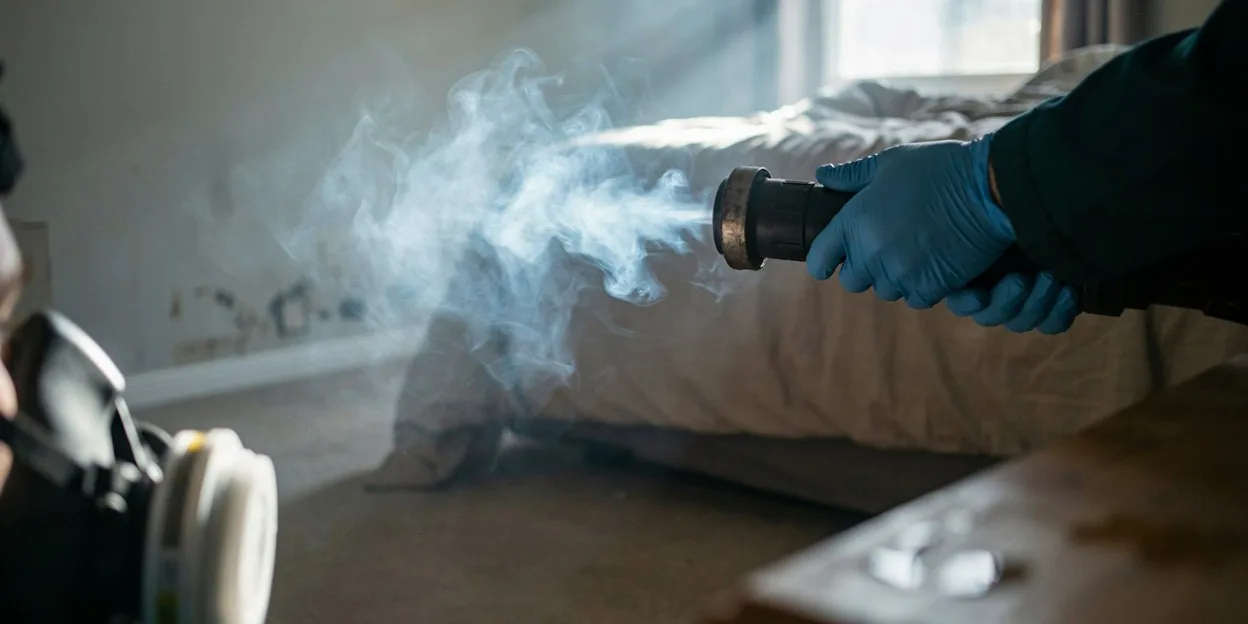
The bottom two feet of drywall came out after the storm, the block was dried, and new drywall went up. The house looks fine. On a humid morning, though, it still smells like low tide in the hall closet and behind the kitchen cabinets. This site connects you by phone with an independent local provider who does mold odor removal in Hudson and across Pasco County.
What the crew does first
A smell that survives a cleanup means something wet was missed. The crew goes looking for it with a meter and a flashlight, in the places the first job skipped: the bottom of the kitchen cabinets, the wall behind the water heater, the closet under the air handler, the belly of a manufactured home, and the block cells behind new drywall that went up too soon.
They do not start with a fogger or an ozone machine. Treating the air before the source is out covers the smell for a week and it comes back. Finding the wet material is the job.
What to do in the next hour
Walk the house on a humid morning, before the air conditioning has run much, and note where the smell is strongest. Open the cabinet doors under the sinks and the closet with the air handler. Smell the return grille while the fan runs. That map is worth more to the crew than a description.
Do not paint over stains, do not set out bowls of anything, and do not run a fragrance plug-in. All three hide what the crew needs to find.
What is usually saved and what is removed
Whatever is still wet and growing comes out: a cabinet toe kick with a soaked back, a strip of new drywall over a block wall that never dried, insulation in a belly wrap, a duct run with growth on the liner. The crew works under containment when they open a wall, the same as any removal.
Once the source is gone and the area reads dry, they treat the space. That means HEPA vacuuming and wiping every surface in the affected rooms, then an air scrubber running for a few days, and in some cases a treatment applied to the framing and block. Porous things that hold the smell after everything else is clean, like an old carpet pad or a particleboard cabinet base, usually leave.
If the source turns out to be the coil or the ducts, the job becomes HVAC mold cleaning. If it is a whole floor that was never properly dried, it becomes mold removal in the rooms that were missed, or whole-home mold remediation if that is every room.
Pasco County notes: fast rebuilds and manufactured homes
After Helene and Milton in the fall of 2024, thousands of homes on the west Pasco coast were gutted and rebuilt in a hurry. Some of that drywall went over block that had not finished draining. That is the single most common reason a house here smells musty a year after it was fixed.
Manufactured homes in the 55-plus parks along US-19 are the other one. Surge or rain that got past the skirting sits in the belly wrap under the floor, and nothing shows inside until the vinyl floor bubbles. The crew has to open the belly to find it.
Fixing a smell does not need a permit. Opening walls or floors and replacing them can, through Pasco County or your city. Florida licenses mold assessors and remediators separately under Chapter 468, Part XVI, and if a buyer wants proof the smell is gone, an assessor can test for it. That is separate from the remediator and something you arrange on your own.
Calling about mold odor removal
Have the address, when the smell started, and what work has already been done. Say where it is strongest and whether it changes with rain, humidity, or the air handler running. Call (727) 353-1690.